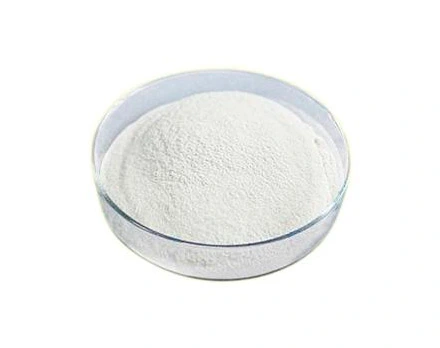
Polydextrose Syrup (Sugar free type) is a food component with health care functions that can supplement the water-soluble dietary fiber needed by the human body. The viscosity of polydextrose solution decreases with the increase of temperature and increases with the increase of concentration. At the same concentration, the viscosity of polydextrose solution is slightly higher than that of sucrose and can be used as a food thickener. Polydextrose is difficult to absorb, so compared with normal food, the increase in blood sugar will not be very high, it is not easy to increase blood sugar, and it will not stimulate the secretion of insulin, so it is very suitable for diabetic patients.



Polydextrose syrup is easily soluble in water and can dissolve about 80% when the temperature reaches 25°C. The solubility becomes stronger as the temperature increases.
Polydextrose solution can change the level of intestinal fat absorption by changing intestinal flora.
Adding polydextrose to meals can promote intestinal absorption of calcium. Polydextrose is fermented in the intestine to produce short-chain fatty acids that acidify the intestinal environment, and the acidified environment increases calcium absorption.
Polydextrose is very stable and makes it difficult for microorganisms to survive in it.
Polydextrose can be used as a wetting agent to prevent or slow down the adverse changes of moist food, making the food neither dehydrated nor absorb water.
Product name | Polydextrose Syrup |
Appearance | Light yellow or yellow viscous syrup |
Polydextrose Content(on dry basis, without ash), % | ≥90.0 |
Solid substance, % | ≥70.0 |
1,6-Dehydration-D-Glucose(on dry basis, without ash), % | ≤4.0 |
Glucose+Sorbitol(on dry basis, without ash), % | ≤6.0 |
5-Hydroxymethylfurfura(on dry basis), % | ≤0.1 |
Sulphate Ash, % | ≤0.3 |
pH | 3.0-6.5 |
Lead (Pb), mg/kg | ≤0.5 |
Arsenic (As), mg/kg | ≤0.5 |
Total Plate Count, CFU/g | ≤1000 |
| Total Coliform, MPN/100g | ≤30 |
Mold, CFU/g | ≤25 |
Yeast, CFU/g | ≤25 |
Polydextrose Syrup can be used in prepared milk, flavored fermented milk, frozen drinks, cocoa products, chocolate and chocolate products, candies, baked goods, meat enema, mayonnaise, salad dressing, beverages, and jelly products. The maximum usage is appropriate according to production needs.