How to Use Fructose Syrup Correctly in Food?
The correct use of high fructose syrup in food involves balancing its functional value and health risks, which requires comprehensive control based on food types, process requirements, regulatory standards, and health principles. The following outlines specific usage precautions from the perspectives of food production and consumption:
I. Food production end: the "correct" principle of professional application.
When using high fructose syrup in food production, it is necessary to first meet the requirements of national regulations, then match its function according to the characteristics of the food, and control the amount added to avoid excessive dependence.
1. Comply with regulatory standards: clarify whether it can be used or not, and the upper limit of how much it can be used.
Different countries/regions have clear regulations on the scope and limit of use of fructose syrup in food, which must be strictly followed to avoid illegal addition. Taking China as an example, it mainly relies on the "National Food Safety Standard for the Use of Food Additives" (GB 2760) and related starch sugar standards (such as GB/T 20882 "Fructose Syrup").
Scopes of use: It is allowed to be used for more than 20 types of food such as beverages, candies, pastries, baked goods, candied fruits, frozen drinks, etc. It is prohibited to use it for infant formula food and complementary foods.
Limit requirements: Most foods do not have a clear "separate limit for fructose syrup", but must comply with the "total sugar limit" of the food. In production, formula calculation is required to avoid exceeding the total sugar limit.
2. Control the amount of additives: avoid "excess functionality" and health risks.
In production, it is necessary to avoid excessive addition to reduce costs (the unit price of fructose syrup is lower than that of sucrose), and follow the principle of "minimum necessity" – only adding the amount that meets functional requirements, rather than the more the better.
II. Consumer end: Learn to identify and control intake reasonably in daily choices.
For ordinary consumers, the core of "correct use" is to avoid long-term and large intake of foods containing fructose syrup, rather than completely prohibiting it (because small intake is in line with the body's metabolic capacity).
1. Learn to read labels: identify "hidden" high fructose syrup.
In food labels, fructose syrup may appear under different names, so it is important to pay attention to the "ingredient list" and "nutritional content list".
Ingredients list: If "high fructose syrup", "fructose corn syrup", "isomerized corn syrup", or "corn syrup (high fructose corn syrup type)" appear and rank high (in descending order of content in the ingredients list), it indicates that the food has a high content of fructose corn syrup.
Nutritional Composition Table: Pay attention to the "total sugar content per 100g/100mL". If the total sugar is ≥ 15g/100g (or ≥ 10g/100mL), even if the fructose syrup is not clearly labeled, it may contain a large amount of free sugars (including fructose syrup), and should be carefully selected.
2. Control intake frequency: Reduce excessive consumption of high fructose corn syrup foods.
The following types of food are the "hardest hit areas" for fructose corn syrup and should be consciously reduced in consumption:
Sugar containing beverages: such as cola, sweet fruit juice drinks, energy drinks (some products have an added amount of fructose syrup exceeding 10%);
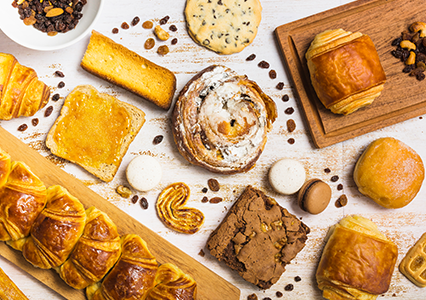
Processed desserts: such as cakes, donuts, and sugary cookies (often added in large quantities to enhance taste and shelf life);
Seasoning processed products: such as partial tomato sauce, salad dressing, honey flavored snacks.
Suggestion: Consider this type of food as an "occasional adjustment" rather than a daily staple or snack.