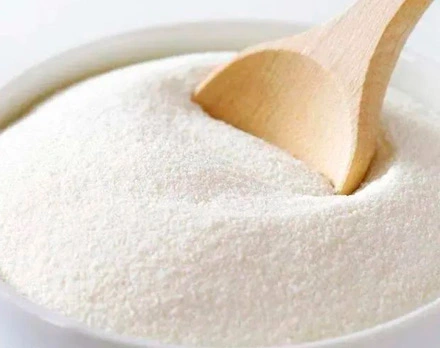
Isomaltulose,or palatinose, full chemical name: 6-O–D-glucopyranosyl-D-fructose. The sweetness characteristics and appearance are very similar to sucrose, without any peculiar smell, and it is a white crystalline functional disaccharide. The melting point is 122℃~123℃, which is much lower than 182℃ of sucrose. Its reducing activity is 52% that of glucose, its sweetness is 42% that of sucrose, and it does not change with temperature. Isomaltulose has a mild taste. In addition, it has good acid stability and low hygroscopicity. Isomaltulose has the same energy value as sucrose (16.72kj/g) and is a nutritional and energy sweetener.
Isomaltulose is a sugar that is slowly digested by the human body. Same like sucrose,it can also be broken down into glucose and fructose to provide the body with all its energy. But because its digestion process is very slow, energy can only be absorbed slowly. Isomaltulose can be consumed in large quantities. According to relevant medical research, isomaltulose will not be digested by saliva, gastric acid and pancreatic juice. It is hydrolyzed into glucose and fructose in the small intestine and then slowly digested and absorbed by the villi of the small intestine in the form of simple sugars. Therefore, there is no safety issue for consumption. What is a huge difference from the general sugar alcohols that can cause diarrhea when consumed in large amounts is that human test results show that direct ingestion of 85 grams of isomaltulose at one time will not cause diarrhea. The safety of isomaltulose has been fully recognized by the EU food safety department, the US FDA, the Japanese Ministry of Health and Welfare, etc., and can be found on the relevant official websites and documents. In China, isomaltulose is approved to be added in appropriate amounts based on production needs. Isomaltulose itself does not cause tooth decay. Isomaltulose has an excellent taste , which is very similar to sucrose, relatively mild and delicate, and has no bad taste during or after consumption. The solubility of isomaltulose is only half that of sucrose at low temperatures, but as the temperature increases, its solubility increases sharply, reaching 85% of sucrose at 80°C. Therefore, foods containing isomaltulose produced at relatively high temperatures may crystallize when stored at room temperature; the viscosity of isomaltulose is almost the same as that of sucrose, and the viscosity of isomaltulose solution at the same concentration The viscosity is slightly smaller than that of sucrose solution, making it easier to replace sucrose in product development. Isomaltulose has extremely low hygroscopicity and basically does not absorb moisture when the humidity is below 70%. Even if 1.5% to 15% citric acid is added, its hygroscopicity will not increase. However, under the same conditions, the hygroscopicity of granular sucrose is will increase significantly, so water migration generally does not occur in the product and it has water retention properties. The acid stability of isomaltulose is very good . Even if isomaltulose is mixed with citric acid and stored for 22 days, no invert sugar is produced. After boiling 20% acidified isomaltulose aqueous solution and sucrose aqueous solution (PH=2), they compared their hydrolysis rates and found that sucrose was completely hydrolyzed after 60 minutes, while isomaltulose was not hydrolyzed at this time. These properties indicate that isomaltulose is more stable than sucrose as a sweetener for foods containing organic acids or vitamin C.
The test of cooking candy with isomaltulose shows that the sweetness does not change at 120°C, and only slight browning occurs; at temperatures as high as 140°C, isomaltulose begins to undergo reactions such as browning, decomposition, and polymerization. These reactions are significantly intensified as the temperature continues to rise above 160°C. Therefore, the thermal stability of isomaltulose is slightly worse than that of sucrose. Most bacteria and yeast cannot ferment and utilize isomaltulose. When acidic beverages or bread containing isomaltulose and sucrose are stored for a period of time, it is found that the amount of isomaltulose does not decrease at all. Therefore, when isomaltulose is used in fermented food and beverage production, its antimicrobial properties allow the sweetness of the product to be easily maintained. And because isomaltulose cannot be used by most bacteria, its related products can add no preservatives or less preservatives.
Isomaltulose is an excellent sweetener with a very good taste and pure sweetness. It can be used in candies, low-sweet drinks and foods. It can be used alone or together with sucrose. Isomaltulose also has a very good odor masking effect, and can also balance the taste and improve the flavor of food. This provides convenience for using natural and healthy raw ingredients as much as possible to develop functional foods with good taste and texture. For example, the fish oil smell of DHA, the peculiar smell of vegetable and fruit juices, and the beany smell of soy milk all have very good effects.
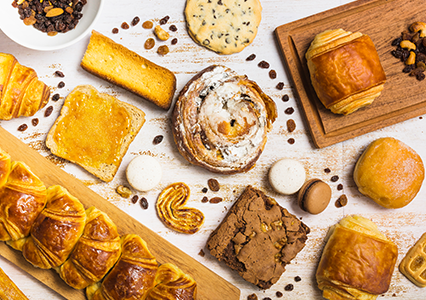
The sweetness of isomaltulose is about half that of sucrose , and it is suitable for use in low-sweetness candies, pastries, etc. When used in baked goods, it can replace sucrose at a ratio of 1:1, and generally there is no need to change the traditional formula. If you feel that the browning is too light, you can increase the baking temperature appropriately or add a small amount of fructose. It can be used in appropriate amounts according to production needs in ice cream, popsicles, candies, pastries, beverages, biscuits, bread, jam, cans, and prepared wine.