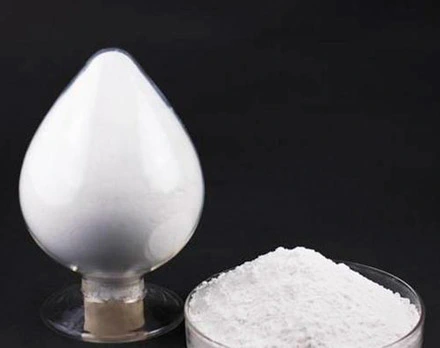
Xanthan gum, is a neutral water-soluble polysaccharide discovered by researchers in the 1950s from Xanthomonas campestris. Xanthan gum mostly uses sugar as the main raw material and is produced through microbial fermentation.It is a microbial extracellular heteropolysaccharide. Its basic structure is composed of repeated pentasaccharide units. This unit is composed of glucose, mannose and glucuronic acid.
In the secondary structure of xanthan gum, the side chains are reversely wound around the main chain to protect the main chain from degradation, making it resistant to high temperatures, acids and alkalis, and resistant to enzymatic hydrolysis. When a 1% xanthan gum solution is repeatedly heated and frozen at 0 to 80 degrees, its viscosity remains almost unchanged; when heated from 25 degrees to 121 degrees, its viscosity only decreases by 3%. Its solution is very stable to acids and alkalis, and its viscosity is almost unchanged at pH 3~11. Many enzymes such as proteases, amylase, cellulases and hemicellulases cannot degrade xanthan gum.
Because the tertiary structure of xanthan gum is a network structure, it has good water flow control properties and therefore has good thickening properties, especially high viscosity at low mass concentrations. A 0.3g/L xanthan gum solution has a viscosity of 90mPa·s. The viscosity of xanthan gum solution is about 100 times that of gelatin with the same mass concentration. Xanthan gum can be compatible with most synthetic or natural thickeners, such as locust bean gum, guar gum, carrageenan and konjac gum, etc., which can significantly increase the viscosity of the mixed gum. Research shows that when the ratio of xanthan gum to guar gum is 9:1, the apparent viscosity reaches 768mPas.
Applications in liquid and semi-solid formulations
Xanthan gum is a hydrophilic gum that can be used as a thickening agent, suspending agent, emulsifier and stabilizer in liquid and semi-solid formulations. The high viscosity of xanthan gum makes it easier to apply external preparations, and the drug does not easily fall off the skin after the water evaporates, which improves the bioavailability of the drug and the comfort of medication. It is an excellent suspending agent and thickener.
In eye drops, the drug needs to be in contact with the site of administration for a long time to achieve better efficacy. Xanthan gum is highly effective when used as an eye drop auxiliary, and can prevent and treat various eye diseases such as retinitis and choroiditis. Rapid blinking of the eyeballs reduces the viscosity of the eyedrops, allowing the drug to quickly disperse and fully contact the diseased site; when the eyeballs stop blinking, the viscosity increases, making it difficult for the eyedrops to flow and prolonging the drug's action time. Eye drops prepared by mixing xanthan gum and sodium hyaluronate can protect corneal epithelial cells and accelerate cell regeneration.
Applications in solid dosage forms
Xanthan gum is mainly used as a binder, disintegrant, sustained release agent and controlled release agent. When used as a binder, the tablets have strong adhesion and the tablets will not be too hard. At the same time, starch, arabic gum, guar gum, locust bean gum and other auxiliary materials can be added to adjust to the required hardness. During the tableting and storage process, splits are less likely to occur. Xanthan gum has good swelling, wetting and capillary action. Therefore, it is also a good disintegrant and is suitable for both highly water-soluble drugs and poorly water-soluble drugs. At present, xanthan gum is a component of international microcapsule drug capsules and plays an important role in controlling drug release.
We use cookies to optimise and personalise your experience, but you can choose to opt out of non-essential cookies.
To find out more, read our and Cookie Policy.