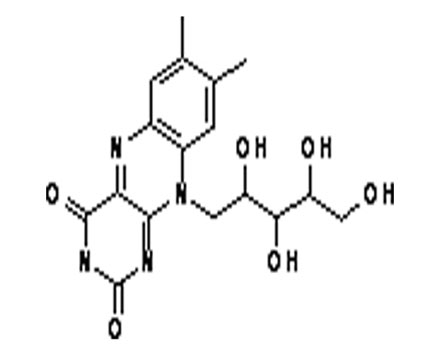
In 1848, a Scottish chemist named John Stenhouse accidentally discovered erythritol while studying lichen dyes, but at that time it was not clearly separated and was only vaguely defined as erythric acid. Erythritol was not isolated until 1852.
In 1849, French pharmacist Louis Feux Joseph Garot (1798-1869) first separated erythrose from rhubarb and named it erythrose because it appears red (erythr) in the presence of alkali metals.
Later, it was found that the separated erythritol is actually a sugar alcohol formed from the reduction reaction of erythrose. Therefore, in its Chinese name, "赤" (chi) and "藓" (xian) are combined with Erythrose and Erythritol, which have similar molecular formulas.
Since then, erythritol has been named. In 1950, erythritol was found in black sugar honey fermented by yeast, and then it was mass-produced and commercialized by the Japanese in the 1990s, who were having a good time.
Erythritol has the lowest caloric value among all sugar alcohols. In a study conducted by Bornet et al. in 1996, its caloric value was found to be less than or equal to 0.4 kcal/g. The U.S. Food and Drug Administration (FDA) specifies its caloric value as 0.2 kcal/g, while in Japan and some other countries, it is defined as 0. Therefore, erythritol is also called a zero-calorie food.
Erythritol is easily absorbed in the small intestine, and most of it enters the bloodstream for circulation, with only a small amount directly entering the large intestine as a carbon source for fermentation. However, due to the lack of enzymatic systems in the human body to metabolize erythritol, the erythritol in the bloodstream cannot be digested and broken down but can only be excreted through the kidneys in the urine. This unique metabolic feature determines the low caloric value of erythritol.
According to the caloric evaluation method for sugars established by the Japanese Ministry of Health, Labour and Welfare (Heisei 3rd Health and Welfare New Address No. 71), the caloric value of erythritol is determined to be 0 kJ/g, and the FDA in the United States recognizes the caloric value of erythritol as 0.2 kcal/g, which is nearly 12 times lower than the widely used xylitol (2.4 kcal/g) in sugar-free products.
Erythritol is being used in more and more food and beverage industries as a new generation of health products. Before we start producing it ourselves, the price is quite high.