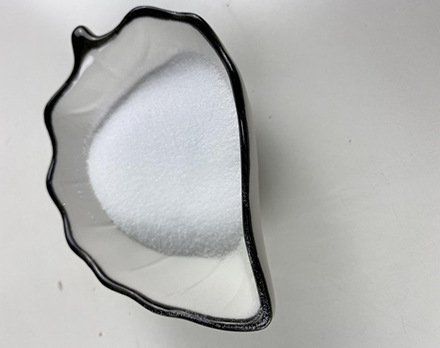
Oligosaccharides are polymers composed of 2-10 monosaccharide molecules through glycosidic bonds, and have different names depending on the glycosidic bonds. Different functional oligosaccharides commonly seen on the market include: isomalt oligosaccharides (IMO),fructooligosaccharides (FOS), galacto-oligosaccharides (GOS), xylooligosaccharides (XOS), lactofructooligosaccharides (LACT), soy oligosaccharides (SOS), inulin, etc., all of which belong to the category of prebiotics.
The sweetness of isomaltooligosaccharide, fructooligosaccharide, galacto-oligosaccharide, manno-oligosaccharide, lactosucrose, xylooligosaccharide, raffinose, etc.is usually only 30%-60% of sucrose, and the sweetness, physical and chemical properties and physiological functions are related to the structure and molecular weight of sugar molecules.
In the food industry, oligosaccharides can be used to adjust the sweetness, viscosity and freezing temperature of foods, improve the taste of beverages and foods, adjust the water retention and water activity of foods, control browning during heat treatment, and prevent starch aging.
Some functional oligosaccharides (such as palatinose and coupled sugars) have anti-caries effects, and some (such as maltotriose and tetrasaccharides) have the effect of inhibiting intestinal putrefactive bacteria.
The production methods of functional oligosaccharides can be roughly divided into five types:
(1) Extraction from natural raw materials.
(2) Production by glycosyl transfer reaction of transferase and hydrolase.
(3) Enzymatic hydrolysis.
(4) Acid-base conversion.
(5) Chemical synthesis.
2.1 Isomaltooligosaccharides
Isomaltooligosaccharide, also known as branched oligosaccharide, is a widely used functional oligosaccharide because it can promote the significant proliferation of bifidobacteria in the human body, has the function of water-soluble dietary fiber, low caloric value, and prevents tooth decay.
Bidirectional regulation of constipation and diarrhea.
After the human body ingests this product, the number of bifidobacteria in the beneficial bacteria flora in the body can increase by 10-100 times, and at the same time produce short-chain fatty acids such as acetic acid and lactic acid, forming a weak acid environment for normal intestinal function, inhibiting the growth and reproduction of exogenous pathogenic bacteria and inherent putrefactive bacteria in the intestine, reducing the growth and accumulation of putrefactive substances in the intestine, promoting intestinal peristalsis, clearing intestinal waste, preventing and improving constipation, diarrhea and hemorrhoids.
Lower blood lipids and blood pressure.
As an excellent water-soluble dietary fiber, it can effectively reduce the amount of serum cholesterol, triglycerides, and free fatty acids, and has a good improvement effect on a series of cardiovascular diseases such as hypertension and arteriosclerosis caused by high blood lipids.
2.2 Gentio-oligosaccharides
Gentianobiose is a by-product of acid hydrolysis of starch to produce glucose powder. It exists in the crystallization waste liquor. Its bitter taste hinders the production of whole sugar powder. However, gentiooligosaccharides mainly composed of genttianobiose are difficult to digest and have a very high bifidobacterium proliferation effect.
Industrially, it is a mixture of oligosaccharides synthesized by 9-1,6 bonds using glucose as raw material through the action of fungal p-glucosidase. The product contains 30% gentiobiose, 51% glucose and 4%-5% gentiotriose tetraose. Due to its bitter taste, it is suitable for use in products with a certain bitterness in the food industry, such as coffee and cocoa products. This oligosaccharide is a very effective bifidobacterial factor. Even with a small amount of use, the increase in bifidobacteria can be seen, but it is currently expensive due to its low production.
2.3 Trehalose
Trehalose is a functional oligosaccharide with low caloric value and anti-caries effects, but it is not a bifidobacterial factor.
Trehalose is stable in acid and heat; its special physiological function is to improve the ability of animal and plant cells to resist adverse environments such as dryness, high temperature and cold.
An obvious example is the production of dry yeast. If the trehalose content in yeast cells is high, the dry yeast made will have strong vitality and long shelf life.
When microorganisms are freeze-dried and stored, adding an appropriate amount of trehalose can reduce mortality. Trehalose is a non-reducing disaccharide formed by glucose with Q, Q-1,1 bonds; it is widely found in animal, plant and microbial cells. In the past, it was extracted from yeast (content 10%-20%), and the procedures were complicated and could not be mass-produced.
2.4 Fructooligosaccharides
Fructooligosaccharides (FOS), also known as oligofructose or fructooligosaccharides, have a molecular formula of GF-Fn, n=1-3 (where G is glucose and F is fructose). They are composed of sucrose and 1-3 fructose groups bonded to the fructose group in sucrose through a β2,1 bond to form sucrose triose, sucrose tetraose and sucrose pentose (respectively abbreviated as GF2, GF3, GF4) and their mixtures.
Oligofructose is a natural active substance. Its sweetness is 0.3-0.6 times that of sucrose. It not only maintains the pure sweetness of sucrose, but also has a lighter sweetness than sucrose.
It is a new sweetener with health functions such as regulating intestinal flora, proliferating bifidobacteria, promoting calcium absorption, regulating blood lipids, immune regulation, and anti-caries. It is hailed as the most promising new generation of additives after the antibiotic era – probiotics; it is called probiotics (PPE) in France.
It can be used in the fields of human food and beverages, human nutritional health products, pet food, and animal nutrition. It has been used in dairy products, lactic acid bacteria beverages, solid beverages, candies, biscuits, bread, jelly, cold drinks and many other foods.
2.5 Lactose
Lactofructo-oligosaccharide refers to a low-polymer sugar composed of 3 to 9 monosaccharides connected by glycosidic bonds. It is made from lactose and sucrose (1:1). Under the catalysis of β-fructofuranosidase produced by Arthrobacter, the fructose group produced by the decomposition of sucrose is transferred to the C1 hydroxyl group of the reducing end of lactose to generate galactosyl sucrose.
Lactofrucose is a functional oligosaccharide and an effective proliferation factor for bifidobacteria. It has special physiological functions such as bacterial proliferation, low calories, low tooth decay, lowering blood cholesterol, improving blood lipids, and promoting calcium absorption.
Lactofrucose is almost not digested and absorbed by the human body. After ingestion, it will not cause fluctuations in blood sugar levels and blood insulin levels in the body, and can be consumed by diabetics.
2.6 Galacto-oligosaccharides
Galactooligosaccharides (GOS) are a kind of functional oligosaccharides with natural properties. Their molecular structure is generally composed of 1 to 7 galactose groups connected to galactose or glucose molecules, that is, Gal-(Gal)n-Glc/Gal (n is 0-6).
In nature, GOS exists in trace amounts in animal milk, while it is found in higher amounts in human breast milk. The establishment of the bifidobacterium flora in infants depends largely on the GOS component in breast milk.
Galacto-oligosaccharides are made from lactose as raw material, catalyzed by the 9-galactose first enzyme of fungi, namely lactase, at high concentrations. Its main component is a trisaccharide, 6-galactosyl lactose.
p-galactosidase catalyzes both the hydrolysis of lactose and, at high substrate concentrations, the transfer reaction of lactose. The products of the transfer reaction are disaccharides (galactosyl lactose), trisaccharides, and larger oligosaccharides.
2.7 Soybean oligosaccharides
Soybean oligosaccharides are a general term for soluble sugars in soybeans. The main components are sucrose (disaccharides), raffinose (trisaccharides), and stachyose (tetrasaccharides) with 3 to 4 monosaccharides.
Soybean oligosaccharide is a low-sweetness, low-calorie sweetener with 70% of the sweetness of sucrose and 8.36 kilojoules per gram, which is only 1/2 of the thermal energy of sucrose. It is also safe and non-toxic.
Soybean oligosaccharides are mainly distributed in soybean hypocotyls, and their main components are stachyose and raffinose.
The heat preservation and hygroscopicity of soybean oligosaccharides are lower than that of sucrose, but better than that of fructose syrup.
Soybean oligosaccharides have the effects of laxative and intestinal cleansing, promoting the proliferation of bifidobacteria in the intestines, lowering serum cholesterol, protecting the liver, and inhibiting the formation of corrupt substances in the intestines.