High Sweetness And Low Calorie Content–Natural Stevia
High sweetness and low calorie content are the core advantages of natural stevia, making it highly sought after in the trend of healthy eating.
I. High sweetness: far exceeding the "sweetness efficiency" of sucrose.
1. Sweetness levels: The sweetness of stevia is about 200-300 times that of sucrose. This means that only a very small amount (such as 1 gram of stevia) is needed to achieve a sweet taste equivalent to 200-300 grams of sucrose. To make a beverage that requires 100 grams of sucrose seasoning, using stevia instead only requires 0.3-0.5 grams, significantly reducing the amount needed.
2. Sweetness characteristics: Its sweetness release is relatively slow, and the aftertaste has a slight herbal fragrance or bitterness (which can be improved by different extraction processes). Therefore, in practical applications, it is often compounded with other sweeteners (such as sucrose and erythritol) to optimize the taste.
II. Low calorie: almost negligible energy intake.
1. Calorie value: The calorie content of stevia is only about 0.1 kcal/g, which is 1/40 of sucrose (4 kcal/g) and can almost be considered as "zero calorie". The main component of stevia is steviol glycosides (such as steviol glycosides, rebaudin A, etc.), which the human body cannot effectively metabolize and therefore do not produce energy.
2. Comparative advantage: Compared to other natural sweeteners (such as xylitol, 2.4 kcal/g), stevia has a more significant calorie advantage and is more friendly to people who need to strictly control their calorie intake.
III. The core value of "high sweetness+low calorie".
1. The ideal choice for controlling and reducing sugar intake.
For patients with diabetes: Stevia does not affect blood glucose fluctuation, and can replace sucrose to meet the demand for sweetness, while avoiding blood glucose rise.
For weight loss enthusiasts: It can reduce calorie intake without sacrificing the sweetness and taste of food to help control weight.
For children: Reduce the risk of dental caries (not decomposed by oral bacteria to produce acid), and reduce obesity caused by excessive intake of sucrose.
2. Efficient raw materials for the food industry.
Low usage can reduce the transportation and storage costs of food (without the need for excessive addition of sucrose).
It does not affect the physical properties of food (such as osmotic pressure, water activity), and is suitable for use in various products such as low sugar, sugar free beverages, baked goods, sauces, etc.
IV. Natural source: an important endorsement of safety.
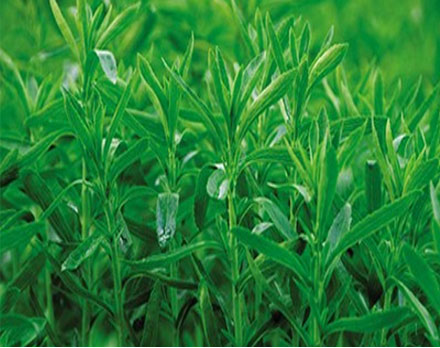
The "natural" properties of stevia complement its high sweetness and low calorie characteristics. It is extracted from the leaves of stevia and processed through purification, crystallization, and other techniques, rather than artificially synthesized (such as aspartame). This feature makes it more attractive in the context of increasing consumer demand for "natural ingredients".