Use of Xanthan Gum in Food Processing
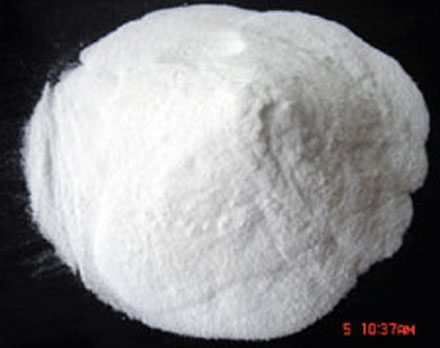
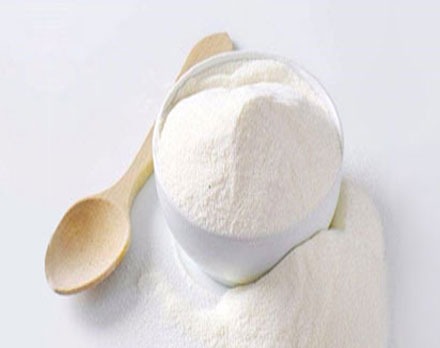
Xanthan gum is a white or light yellow powder with excellent thickening, suspension, emulsification and water solubility, and good thermal and acid-base stability, and can be used in various foods. Xanthan gum can dissolve quickly in water and has good water solubility. It can also dissolve in cold water, which can save complicated processing and is easy to use.
However, due to its strong hydrophilicity, if it is directly added to water without sufficient stirring, the outer layer absorbs water and swells into micelles, which will prevent water from entering the inner layer, thus affecting the effect. Therefore, it is necessary to pay attention to correct use.
Xanthan gum solution has the characteristics of high viscosity at low concentration (the viscosity of 1% aqueous solution is equivalent to 100 times that of gelatin), and is an efficient thickener. Xanthan gum aqueous solution has high viscosity under static or low shear action, and shows a sharp drop in viscosity under high shear action, but the molecular structure remains unchanged.
Application and dosage of xanthan gum in food processing.
Xanthan gum is a shear-thinning pseudoplastic fluid. Its viscosity gradually increases with the increase of mass concentration, and shows a trend of decreasing first and then increasing with the increase of temperature. It is also beneficial to the shape preservation of food during processing. Xanthan gum is a thermoreversible gel. Xanthan gum has good freeze-thaw stability but poor water holding capacity. It should be selected and used according to specific circumstances in food processing.
1. Application in beverages.
Xanthan gum has good hydrophilicity and good stability to temperature, acid, alkali and salt. It can be quickly dissolved in aqueous solution and form a stable sol, increase the consistency of beverages, and improve the stability and particle suspension of beverages. For example, the amount used in liquid beverages is 0.1-0.3%, which plays a role in thickening, suspending and improving sensory quality; the amount added in solid beverages is 0.1-0.3%, which makes the product easier to shape and enhances the taste.
2. Application in grains and grain products.
Dough is formed by adding a small amount of water to flour and kneading it for a period of time to form a ball, relying on gluten protein to maintain a certain shape. Xanthan gum has a strong water absorption capacity and can combine with water to form a viscous gel. It can combine with starch particles and gluten proteins to form a three-dimensional spatial network structure, thereby increasing the water holding capacity of the dough, enhancing the gluten strength, and improving the stability of the dough. The usage amount in flour products is generally 0.03-0.08%, which plays a role in enhancing toughness, holding water, and extending the shelf life.
In addition, adding xanthan gum to quick-frozen dumplings or wonton wrappers can improve the taste of the dough, reduce the rotten skin and the degree of soup during cooking, and adding a certain amount of xanthan gum to the filling can make the filling soup rich and full.
3. Application in baked foods.
Xanthan gum is a polysaccharide containing a large number of hydroxyl groups. It is a hydrophilic colloid that can interact with gluten proteins to form a composite spatial network structure, significantly improve the water holding capacity of gluten proteins, and improve the strength of the dough, thereby increasing the water holding capacity, elasticity, and softness of baked foods, improving the taste, and extending the shelf life. The usage in cakes is generally 0.1-0.3%, which increases micropores, softens, and prolongs shelf life; the usage in bread is generally 0.1-0.2%.
4. Application in frozen drinks.
Xanthan gum can stabilize emulsions in the range of -18~100 ℃, inhibit the migration of water molecules, control the growth rate of ice crystals, make ice cream soft and delicate, and increase the viscosity of ingredients, so that ice cream has good plasticity, shape retention, viscosity and softness. The usage in ice cream is generally 0.1-0.3%, which plays the role of multi-micropores, no ice, shortening aging time, and making the product texture delicate.
5. Application in condiments.
Xanthan gum has good water solubility, can quickly dissolve in water to form sol, play a thickening role, and has strong stability to heat, acid, alkali and salt, so it can be added to seasonings. For example, the usage in soy sauce and oyster sauce is generally 0.05-0.1%, which has the functions of good salt tolerance, increasing viscosity, being suitable for making sauces, and enhancing wall adhesion and adhesion.
Xanthan gum is a microbial extracellular polysaccharide that is not digested by the human body and has low calories, so it can be used as a good dietary fiber in functional foods.