"Sugar alcohols" are monosaccharides that undergo catalytic hydrogenation and sodium borohydride reduction to the corresponding polyols. Although sugar alcohols are not sugars, they have certain sugar properties. It can satisfy the taste of "sweetness", and its own GI value is very low and will not cause an excessive burden on the body's blood sugar level. And what we are talking about today is the so-called "sugar alcohol" substance, which belongs to natural sugar substitutes and is a component that exists in natural plants.
Sweet foods made with sugar alcohols are called sugar-free foods. Sugar alcohols are not used by the microorganisms in the oral cavity and do not lower the oral pH but increase, so they do not corrode the teeth and are good material for preventing dental caries. Sugar alcohol has no effect on the increase of human blood sugar level and can provide a certain amount of calories for diabetic patients, so it can be used as a nutritional sweetener for diabetic patients to provide calories. Sugar alcohol has now become an unlimited use approved by the International Food and Health Organization.
Sugar alcohols are monosaccharides that undergo catalytic hydrogenation and sodium borohydride reduction to the corresponding polyols. Although sugar alcohols are not sugars, they have certain sugar properties. Currently developed are sorbitol, mannitol, erythritol, maltitol, lactitol, xylitol, etc. These sugar alcohols have high stability to acid and heat and are not prone to Maillard reaction. It becomes a low-calorie food sweetener and is widely used in low-calorie food formulations. Sugar alcohols have been used as sugar substitutes abroad and are widely used in the food industry.
Sugar alcohol synthetic sweeteners have the characteristics of low sweetness, low calories, nutritional type, high safety, good taste, no caries, no effect on blood sugar level, etc., which can be widely used in the food industry and are typical functional food additives.
In addition, the polyhydroxy structure of sugar alcohol products can also make themselves to have the ability to combine with water and have a certain degree of water absorption (except for isomalt and erythritol). Therefore, they have the functions of maintaining food humidity, improving or maintaining softness, improving the rehydration of dehydrated food, controlling crystallization and even controlling the viscosity and tissue structure of food, reducing water activity, etc. As the industry develops, sugar alcohols have also been developed rapidly. In addition, sugar alcohols do not participate in the browning reaction, and caramelization does not occur when heated. The academic session has put forward the concept of "functional food additives", and some food additives with definite health function factors and scientific and detailed test data can be classified into this category. Sugar alcohols are one of the more typical "functional food additives".
Of course, sugar alcohols generally have a laxative effect when taken in large doses. Therefore, the United States and other countries require that the label of the added food should be marked when the daily consumption exceeds a certain amount (depending on the type of sugar alcohol). Indicate the words "excessive diarrhea", some sugar alcohols can cause gas and abdominal distension when ingested too much at one time, such as sorbitol and maltitol provided by maltitol suppliers; but some (such as erythritol) are not involved in metabolism, So no gas is produced after eating.
There are many different sugar alcohols in modern diets. These include xylitol, erythritol, sorbitol, maltitol, etc.
The glycemic index (GI) is a measure of the degree of blood sugar increase in food.
Eating foods with high GI is associated with obesity and many metabolic health problems.
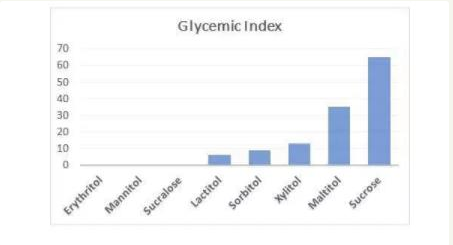
The chart below compares the GI of several sugar alcohols with sucrose-pure sucrose or white granulated sugar and the artificial sweetener sucralose.
As you can see, most sugar alcohols will only have minimal effects on blood sugar levels. In the case of erythritol and mannitol, the glycemic index is zero. The only exception is maltitol, which has a glycemic index of 36. However, this is still very low sugar compared to refined carbohydrates. For patients with metabolic syndrome, prediabetes, or diabetes, sugar alcohols (except maltitol) can be considered an excellent substitute for sugar.